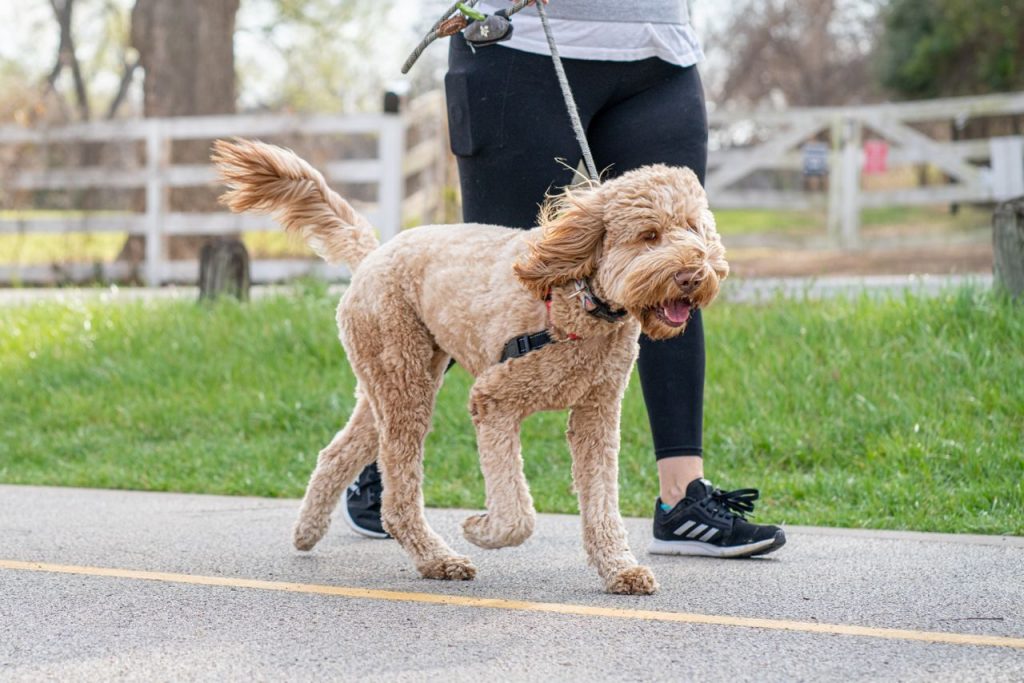

Identify the planned use
Start harness shopping by describing the ordinary activity and any relevant individual care needs. A familiar local walk, travel arrangement and specialist activity are not interchangeable purposes simply because each product has straps and a clip. Check the exact intended use of the model being considered. Keep behaviour concerns separate from the purchase: a new harness should not be presented as a guaranteed treatment or a substitute for appropriate humane support where the daily situation is difficult.
Write down what is awkward about the current arrangement, if there is one. It might be an unclear adjustment, difficult fastening or a size no longer matching the maker’s guidance. Describe the issue without assuming the solution must be a particular brand or shape. A clear shopping brief helps a qualified fitter or manufacturer answer the actual question rather than recommend a product based only on a breed label and a general promise of control.
Use the model’s measurement method
Read the manufacturer’s guide before measuring, including where the measurement is taken and how sizes are selected. Keep units clear and identify the exact range. For example, the Ruffwear Front Range guide defines its own girth measurement and size chart. That is an example of product-specific information, not a universal formula that should be transferred unchanged to every harness with a similar-looking body or an identical size letter.

Measure only in an appropriate comfortable way and seek suitable help if handling or interpretation is difficult. Do not force a process simply to complete an online order. Record the result with the date and product reference, keeping uncertainty visible. A medium from one range need not describe the same arrangement as a medium from another. Compare the actual measurements and guidance rather than using a previous purchase’s label as sufficient evidence of fit.
Look at adjustment and fastening
Read which parts adjust, how the product is put on and where its intended attachment points are located. Ask for clarification when a photograph leaves the mechanism unclear. Consider whether the responsible adult can manage the arrangement comfortably under the instructions. Do not assume more adjustment points automatically produce a better fit or that a particular shape suits every dog. The useful question is whether the documented setup can be achieved appropriately for the individual animal.
Avoid a universal spacing rule presented as proof of safety for every design. Follow the model’s guidance and qualified fitting advice, including any checks during ordinary movement. Do not turn a cold fitting impression into an escape-proof guarantee. If the product’s instructions or the animal’s response raise a question, resolve it before relying on the item in a demanding public setting. Buying the harness is not the same as establishing the complete outing arrangement.

Keep introduction humane
Use appropriate reward-based guidance to introduce unfamiliar equipment, allowing comfortable participation rather than restraining the dog to prove it can be fitted quickly. Do not use the process to test tolerance of repeated handling. If there is distress, a sudden response or apparent pain, seek suitable professional advice rather than assuming persistence will make the problem disappear. The shopping task should fit welfare, not create a reason to override it because a return deadline is approaching.
Explain the correct arrangement to every responsible adult who will use it, keeping the instructions accessible. Children should not be assigned to manage risky behaviour or uncertain equipment fitting. Match compatible leads and other components through documented intended use rather than improvised additions. A harness is one part of an outing plan that also needs space, supervision and an appropriate route, so avoid treating the product’s name as the answer to every practical concern.
Include care in the comparison
Check inspection, cleaning and storage directions and how replacement questions can be answered. Keep the exact product reference and current guidance available, especially where several similar items are stored together. Separate damaged or uncertain equipment from ready pieces. A working buckle alone does not establish the condition of straps, stitching or the whole assembly, and a retailer’s strong or secure label cannot replace the actual instructions and assessment of the product you own.
A useful harness choice can be explained through intended use, documented measurements, appropriate fitting help and a manageable care routine. Check the documented fit and limitations for the actual model rather than relying on an absolute promise that it cannot come off in any situation. Ask clear questions, preserve the answers and review suitability when the individual situation changes. That creates a stronger basis for daily care than a universal fit formula or an assumption that the most elaborate design is automatically the right one.